Living with intention…Week 8

Screen Shot 2017-03-22 at 9.52.50 AMHey folks we made it to week 8 in the meditation series and here we are at the end! It has been really wonderful to put this out there and to practice and re-fresh myself again, I truly hope it has helped you in some way.

Hopefully as a result of your dedicated learning and practice, you may have noticed some  changes in you since you began. If you haven’t, now might be a good time to ask yourself…have you noticed any changes since you began 8 weeks ago?

The changes may be different than you expected and they might not be monumental. They may include subtle shifts, like discovering that you don’t react as readily to stressful situations, maybe now you take a deep breath or two before you act or don’t act. Or maybe Screen Shot 2017-03-22 at 9.54.44 AMyou’ve discovered that you are sometimes able to find space in the day to take a few minutes to yourself, or that you are a little more resilient in difficult situations, or that you’re just a little kinder to yourself. No matter what they were, pat yourself on the back, you made it.

Now the challenge will be to continue on practicing. It doesn’t have to be intense like these 8 weeks have been, it’s up to you to find your own way. There will always be a million things pulling you in all directions and getting in the way, its up to you to remind yourself to be mindful and do things intentionally.

One of the greatest lessons I have learned throughout my 7+ years of living with cancer is, there is no control. It is an illusion. I can control the weather as easily as I can control the things happening in my own body. That is to say, I can’t!

What I can control, and what you can control is how we choose to react (or not react). How you choose to live with meaning and intention. We can let our lives go by with notions of shoulds and wounds, but by doing that we miss life.

So live.Screen Shot 2017-03-22 at 9.52.34 AM

AM

“When possible do just one thing at a time. Pay full attention to what you are doing. When the mind wanders, gently bring it back. Repeat step 3 several billion times. Investigate your distractions”
– Larry Rosenberg


Resources & Tips:Screen Shot 2017-03-22 at 9.43.45 AM

See previous weeks 1,2,3,4,5,6,7.

Tarabranch.com – Lots of goodness!

Dharmaseed.org – Pod Cast

Audio Dharma – Guided Meditations

Meditation Oasis – Podcast & Apps

Daily Mindfulness – Tips and suggestions

The Anger Process – AH FOWL

5-Step Pain Process

Soften Soothe Allow – Dealing w/ difficult situations

Tuning In – Tips on how to be a good listener.

Week 6…Kintsugi – Recognizing the Beauty in Broken Things

Last week was hard!screen-shot-2017-03-04-at-10-29-19-pm

I am still sweeping up pieces of myself and putting them back together.

I have been broken before, so I know I’ll be ok.

Stronger.

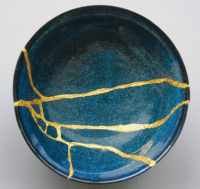
screen-shot-2017-03-04-at-4-39-17-pmKintsugi is the Japanese art of fixing broken pottery, and its philosophy is rather beautiful. It recognises the beauty and value in broken things (more specifically pottery) and speaks to the breakage and repair of objects becoming the history of something, rather than the disuse of it. Potters often repair objects with resins mixed with gold or silver, making no attempts to hide cracks, but to highlight them and make pieces more beautiful and interesting. Here we tend to throw them out. I prefer the Japanese way.

A few years ago at a conference workshop on journalling we were asked to quickly write a response to the idea of Kintsugi. I wrote something and really never shared it, but in light of recent challenges and losses, I am using it to find strength again. I share it with you, its my story in a nutshell.

The fallout is far worse than the sickness. Once treatment is finished, the shell-shocked ruin of a person emerges from the fog. Every emotion and sense of fear comes pouring forth from me.

The problem was I couldn’t share these thoughts and emotions because if people really knew how wrecked I was, how terrified I was, they too may begin to crumble.

I wanted desperately to put back the pieces of my ruined life, to mend them and be the person I had been. The trouble was that person was gone.

I was paralyzed by fear. Terrified that once I managed to fix my life and myself, it would all crumble  to dust and there I’d be again, cancerous.

Somehow I tried my old life back on for size, but it didn’t fit. Like a shoe that was two sizes too small, it was uncomfortable and gave me blisters, but I put my brave face on and carried on. I had “successfully” taped my bowl back together.

Even though it leaked and looked like something Homer Simpson might make, it was together. Then it fell and shattered again.

More pieces strewn about, more pieces to pick up. How would I survive? Recurrence is a bitch.

Faced with few tangible options I decided to forgo trying to fix myself again. Instead I chose to live and love and be happy. I knew the bowl could never look the same, it had been too “damaged” and broken.

I chose to accept it, scars and all. I gave up the mask of bravery and allowed myself to be raw and vulnerable. To share that vulnerability with those around me. In doing so, I slowly turned that ugly shell of a person into something stronger and far more beautiful.

Each crack like a work of art, a work of love, a work of life.

MBSR like Kintsugi is about accepting things as they are.

Week Six of MBSR focuses on two ideas that are designed to help us strengthen our minds to be able to do this: Thoughts are not Facts andMindful Communication

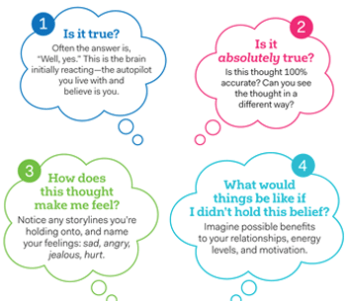
screen-shot-2017-03-04-at-10-35-02-pmSo often how we think and communicate can be a point of stress. By becoming aware over and over again how (in meditation) our thoughts can effect us, we can recognize them, let them go and return our focus to our breath. With time and practice we can gain some distance and perspective on our thoughts allowing us to see that there may be other ways to look at or think about situations, breaking us free from old patterns. Thoughts are only mental events, they are not facts. We certainly are nt our thoughts.

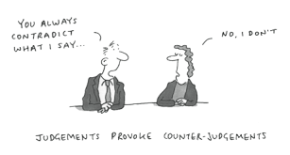
Communication patterns can also be problematic or a source of tension for many of us. One of the reasons communication can break down is that many of us focus on or project the hope that someone else will give us what we want – attention, validation, understanding or approval. What this does, is put pressure on the other person, and sometimes backs them into a corner. Often when we feel pressured, we shut down rather than open up. When that screen-shot-2017-03-04-at-10-35-45-pmhappens during a conversation, often communication breaks down because a person can feel threatened, resentful, and not heard. In MBSR we are learning to focus in on ourself and our behaviour rather than those of others. We tune into our thoughts, emotions and physical sensations so that we can read them. By being aware  of these things, we gain a better sense of perspective and balance and can then focus on communicating our need rather than projecting them.

These ideas can be hard to learn and sometimes even more challenging to practice, because the ask us to really examine ourselves and ask us to be accountable to ourselves. However, once you do learn these lessons, you will find your perspective changing. You may even be able to let go.

Be well,

AM


Activities:screen-shot-2017-03-04-at-10-34-07-pm


Meditations:

Mountain Meditation

Mindfulness of Breath (Track 4)

Bells at 5 Minutes, 10 Minutes, 15 Minutes, 20 Minutes, and 30 Minutes (Track 13)

3 -Minute Breathing Space (Responsive) Track 9

Home Work


*Ways You Can See Your Thoughts Differently – Here are a few things you can do with your thoughts, either in meditation or in your daily life.screen-shot-2017-03-04-at-10-55-26-pm

  • Just watch them come in and leave, like a waves, without feeling like you have to follow them.
  • See if it’s possible to notice any feelings that give rise to the thoughts. Sometimes the context can be a link in a chain of events.
  • Think of thoughts as mental events rather than facts.
  • Write your thoughts down on paper. This lets you see them in a way that is less emotional and overwhelming. It can also give you time to pause and give you a moment to respond differently.

Previous weeks 1, 2, 3, 4, 5.


Melancholy and the Infinite Sadness…Week 5

I’m melancholy today.screen-shot-2017-02-27-at-2-25-02-pm

It’s one of those days where I wish I could unzip my skin and I could become someone else. Just for today. I can’t so I just want to hide. Crawl under my covers, or be like a cat and shelter under the bed.

screen-shot-2017-02-27-at-2-33-53-pmI want to scream, but if I open my mouth to talk, I feel so fragile right now, I’m afraid I’ll break into pieces, and I just don’t have the strength today to put myself back together. So I’m writing.

I’m trying really hard to drag myself out of the swamp of feelings I have. screen-shot-2017-02-27-at-2-38-11-pmSorrow for children who have lost their mothers, husbands who have lost their wives, families who will have an empty seat at their tables. I think about how one day that will be my people, who will feel this for me. It is gutting.

Today the reflection in the mirror is hard to look at. It shows reality. A reality where 4 pills a day keep me alive. A reality where I wonder why I got so lucky, when others stronger, younger, better than me aren’t. A reality where the knife’s edge I dance on is clear and present. A reality where the clock is ticking and time is running out. It’s a hard reality.

I know the only way to get through today is one foot in front of the other.

screen-shot-2017-02-27-at-2-40-37-pmTomorrow I will try to let go.

This is a really crappy way of segueing into the MBSR Week 5, and I swear I’m not making up the theme: Allowing and Letting Be. (Irony?!)

I suppose this is why MBSR can be so helpful. It teaches us and sometimes deliberately forces us to examine and really be present in aspects of our lives that are hard. It also teaches us that it’s okay if we experience hardships, anxiety, loss, or stress. These things are part of life. What it is designed to do is help and encourage us to look at these things with non-judgment and kindness towards ourselves and others.

This is the lesson I find hardest. Guilt is a nasty beast and today I have a bad case of survivor’s guilt. I’m having a hard time with not judging and treating myself with kindness. It’s easier to wallow if I beat myself up or tell myself I shouldn’t allow myself to feel badly. It’s easier to mourn them than it is to mourn me.

Tomorrow I’ll do better. For them. For me.

AM


MBSR Weeks 1, 2, 3, and 4.


Meditations

Working with Difficulty (Track 12)

3-Minute Breathing Space (Regular – Track 8)

3-Minure Breathing Space (Responsive – Track 9)

Bells only at 5, 10, 15, 20, 25, and 30 min


Homework

  • On days 1, 3, 5 practice Working with Difficulty track 12.
  • On days 2, 4, 6 practice sitting in silence for 20 to 30 min using Bells only.
  • Everyday practice the 3-minute breathing space track 8
  • As an unofficial practice, use 3- minute breathing space responsive track 9 for anytime you notice unpleasant feelings (tension, stress, anxiety).

Just Breathe…for Elizabeth

One of the biggest pitfalls of surviving this horrible disease for 8 years is that you lose a lot of friends along the way. I’ve lost too many to count. Every single one of those people is a scar on my heart.screen-shot-2017-02-26-at-5-35-29-pm

After I was diagnosed with cancer, I longed for connection, someone somewhere that could tell me I wasn’t alone. I found my tribe online. Actually I found a few tribes because my experience like many out there didn’t fit a neatly tied up definition of the cancer experience. I wasn’t just a young adult, or a lung cancer patient, but a young adult with incurable ALK+ lung cancer. So eventually I found what I was looking for. I cannot begin to tell you how powerful it is to connect with people who have walked in your shoes.

In many instances I have never met the people I talk to, we tweet, chat, post to web boards, blog, etc. but in those communications we have forged a bond of strength, empathy, support and friendship. In all of my interactions with others like me, whether in person or online, I find that these patients have an uncanny ability to cut through the niceties and small talk and really get down to the humanity of this disease. They know the fear, anxiety, sense of loss, empathy and mutual respect for another’s journey, because they too have been through it. It is because of that shared experience that we connect on such a profound level. I see myself reflected in them and they see themselves reflected in me. It is a connection that many of us don’t have with even our loved ones, because as much as they love and support us, they just simply don’t know what it is like to live with cancer.

Being a part of these communities is such a privilege. So often we share things with each other that we can’t share with even our closest friends and loved ones. It is truly a unique and beautiful thing to have such friends, but these relationships come with a price. It is the double-edged sword of sharing such deep connections – the grief and sense of loss when one of our friends passes away.

Someone once asked me how I can be so sad for someone I’ve never met? The answer is simple. I am mourning for them, their families and friends. I am mourning the loss of potential happiness and love and life that could have been. I am also mourning for me because at some point it will be me. When one of our friends dies, we are reminded very explicitly that we too are vulnerable. For a brief time, the light and fight and hope we have nurtured is extinguished and we are broken. The loss of “virtual” friends results in a very real sense of loss and sadness. We should treat these feelings the same way we would if we lost a “real” friend. Feel the sadness, talk about your feelings, honour your friend’s memory, and if needed seek support, within your communities and outside of them.

Yesterday, the world lost a tremendous  light.

screen-shot-2017-02-26-at-5-25-12-pmShe was 27, a young mother who beamed when talking about her 18 month old miracle boy. She was an incredible advocate speaking out for the lung cancer community and raising awareness and funds for support programs and research. She like me was a teacher and a young face of lung cancer.

Elizabeth also known as From Lizzie’s Lungs was diagnosed just shy of two years ago, she was celebrating being a newly wed. She and her husband were expecing a new arrival when a nagging health concern turned their lives upside down. Lung cancer. A rollercoaster ride no one let alone a 26 year old should face. She faced every challege with stride and with grace. She was a force!

Today I mourn Elizabeth. I mourn for her beatiful son, I mourn for her loving and supportive husband, I mourn for her parents and family who loved her, I mourn for her friends, and I mourn for us.

Fly with the angels Elizabeth. Just Breate.screen-shot-2017-02-26-at-5-27-34-pm

AM


Amanda

Words escape me and I can’t quite express what I’m feeling in the way I want to. Week 5 of our MBSR should be up, but I can’t bring myself to write the post yet. You see, I just found out today that a friend and fierce cancer warrior passed away last night. So if you can bare with me, that post will go up in a few days time.

Losing friends hurts.

I met Amanda about six years ago at a Young Adult Cancer Canada (YACC) conference. It was shortly after I had found out that I was terminal/incurable. I had come to conference for strength in facing what would likely be my last year. I had no idea what would transpire at conference. Previous meetings were fun and offered helpful tips dealing with some of the issues faced by young adults (YA’s) like fertility, loss of identity, isolation, relationships, disintrajectorization*, and so many more. Most importantly, they offered a chance to be with others that just got it.

Most at conference at that time were dealing with their first diagnosis, or were recently out of treatment, there weren’t too many of us that were lifers, so I was surprised to hear about an informal meeting for metastatic participants. I jumped at the chance to attend! That’s where I met Amanda. She like me was one of the 10 who attended that meeting. It was a cathartic experience. It was raw and painful, we cried, swore and shared our most intimate fears, it was beautiful.

It always amazes me how open we can be with others, baring secrets that we don’t share with our most trusted friends and loved ones. One may wonder why that is? Honestly in my experience at that time, I didn’t want my loved ones to know how scared shitless I really was. I didn’t want to admit that I might die. I wanted to shelter and protect my family and loved ones from suffering, both mine and theirs. It was sense felt by many in that room, including Amanda.

In the months following that meeting, we lost three friends. Amanda was not one of them despite being riddled with cancer. It was everywhere, her bones, liver, lungs, and other major organs. She was a walking miracle.

Again we lost friends, but she endured.

We would go on to attend more conferences together. She attended some in a wheelchair and others rocking stilettos, but her spirit was always indomitable. She loved her daughter with ferocity and her whole heart, everyone knew that because she told us with pride. Her personality was big and bold, you always knew where you stood because she didn’t mince words and didn’t hold back. She lived her life with every fiber of her soul. She unknowlingly was my against all odds beacon of hope. screen-shot-2017-02-24-at-4-43-48-pm

Today my shores are a little dimmer.

AM

*Disintrajectorization was a word coined by Travis Gobeil in 2005 and is a term that describes what happens to your life when you get cancer as a YA. Your life is disintrajectorized off its current path and onto another totally different path.


Gathering the Scattered Mind – Week 3

screen-shot-2017-02-10-at-8-39-50-pmMy apologies for the lateness of this post! It was a hospital day yesterday and afterwards my wonderful husband surprised me with an impromptu date night, and we got in late. Also actual writing had to happen and I wasn’t sure what to say, but finally, here we go.

screen-shot-2017-02-10-at-8-36-13-pmThe theme for Week 3 in the Meditation Series is gathering the scattered mind. I’ll be honest that lately I have been incredibly scattered because I have been waiting for scan results, so this weeks practice has been pretty spotty and I’ve been so easily distracted.

For the last little while, I have been learning to live with results that don’t quite meet up with my expectations. It isn’t that they ‘re bad results, its just not the results I want. For a very long time, I was blessed after a course of scans to get the wonderful news that I was NED (No Evidence of Disease), but since I progressed last year and changed meds, I haven’t quite gotten there.screen-shot-2017-02-10-at-8-56-30-pm

Overall, I am very healthy and all the results show that I am stable. The results say my brain and organs are unremarkable (good news ironically) because it means that the cancer is still only in my lungs. The problem lies in the lungs. Although things have not changed from previous studies, within the results, there have always been comments about “stable globular masses” or “stable pleural effusions” and frankly I hate knowing that there is cancer is living in me and that my lungs are trying desperately to kill me.

I don’t know if I was under the misguided impression that NED meant that the cancer was gone or dormant, but it certainly gave me a sense of security and comfort, and not having it keeps me on edge. After all, there is no uncertainty that there is or isn’t cancer in me, its in here and its trying very hard to be active.

As hard as I try not to fixate or catastrophize, I can’t reconcile those feelings of insecurity and chaos when I know how precariously balanced I am on the edge.screen-shot-2017-02-10-at-8-57-45-pm

Maybe its all in the wording

Words.

Never say words don’t matter.

Words have power.

In my case they have the power to set my mind spinning down a trajectory of sadness and fear, which is why I’m really glad that I am posting this MBSR series, because it forces me to recognize these anxieties.

Perhaps as you have been practicing your meditations, you have found yourself wandering too?

Now that we have been practicing for a couple of weeks, you might actually be noticing how busy your mind can be. I know mine certainly is!! You may be replaying past events or have expectations of the meditation, or be noticing fearful thoughts, or even running through your grocery list of chores. Its ok.

You might even be feeling frustrated that you can’t “clear” your mind of those thoughts, or that your mind is wandering. That’s ok. The kind of meditation that we are learning with MBSR isn’t about getting rid of our thoughts and distractions. Its learning to recognize them. Its human nature to want to strive for something or achieve a goal, but here the goal is to have no goals.

I know it sounds a little nuts, but really its such a useful skill. One of the reasons I think the MBSR program is so intense, is to help us to slow down, be deliberate, and to make the skills learned part of our daily routines.

This week we will introduce a new type of meditation. Mindful movement. The idea being that by being more aware of our physical and mental state, we are allowed to be more present in the here and now. These movements encourage us to take time to pause by bringing our attention totally into the body and try to marry our breath with our movements.

Remember though, the goal here is not to have goal. Try to resist the temptation of say having the goal of relaxation. Relaxation might happen, in which case that’s great, but maybe it doesn’t in which case that’s great too, because maybe you noticed that you were carrying tension in your neck and shoulders, which leads you to notice that you are holding on to a negative event that happened earlier on in the day. Then maybe as a result of that noticing, you realize that you had been tense over a non-event and decide to let it go. That’s what can happen when we start recognize our thoughts and our body sensations.

So with that, we introduce Mindful Walking, and Hatha Yoga. I’ll break them down and link to some videos that can help with home practice below. In addition, if you practice Qigong or Tai-Chi these can also act as mindful movements.

Before I post the new practices and homework, I want to hear from you.

How have you been finding things? How did you like last weeks practice? What were some of the pleasant events you experienced? If you want to share, I encourage you to leave me a comment. If you’d like me to share it, let me know too, or else I’ll keep them private.screen-shot-2017-02-10-at-8-54-09-pm

Be well and happy practice.

AM

Activities for Week I can be found here, and for Week 2 here.

Activity I: Unpleasant Events

Last week we had the opportunity to become aware of thoughts and feeling we felt when we experienced pleasant events, this week, we are going to focus on unpleasant events. The activity will act the same as last week where you will notice and record events (for yourself) in a chart or journal.

Day What was the experience? How did your body feel, in detail during this experience? What moods and feelings accompanied this experience? What thoughts went through your mind? What thoughts are in your mind as you write this down?
Example I found a parking ticket on my car. My shoulders got tense and raised, my forehead became tense, my stomach became upset. Frustration, anger, irritation “I was sure I could park there.” “What a waste of money!” “Ugh I hate parking tickets”


Meditation I: Seated Mindful Breathing

Practice mindful breathing seated in a chair or on the floor, make sure you are sitting so that your spine is self-supporting. If seated on the floor, do so on a firm, thick cushion (or a pillow folded over once or twice). Whatever you sit on, make sure your hips are slightly higher than your knees.


Meditation 2: The 3-Minute Breathing Space

Step 1- Becoming Aware – You can do this sitting or standing. If possible, close your eyes. Then bring your awareness to your inner self by asking yourself, “What is my experience right now?”

  • What thoughts are going through my mind? (As best as you can, acknowledge thoughts as mental events, try to put them into words.)
  • What feelings are here? (Turn toward any sense of discomfort or unpleasant feelings, acknowledging them.)
  • What body sensations are here right now? (Quickly scan your body to pick up any sensations of tightness or tension, acknowledge them.)

Step 2 – Gathering – Redirect your attention from physical body sensations to sensations of your breath and breathing itself. Feel your abdomen expanding and contracting. Expansion as you breathe in and contraction as it goes out. Follow your breath all the way in and all the way out, using your breath as an anchor.

Step 3 – Expanding – Try to expand the field of your awareness from your abdomen to include your whole body. Imagine your entire body inhaling and exhaling. Try to notice your posture and facial expressions or if you note any sensations of discomfort, tension, resistance and bring your awareness to those sensations by breathing into them.


Meditation 3: Mindful Walkingscreen-shot-2017-02-10-at-9-51-49-pm

This can be done inside at home, or out in the real world. The key here is to be deliberate and attentive.

  1. Stand straight and tall but not stiff. Take a moment to feel your feet on the ground and let your weight be distributed evenly. Are you leaning to one side or the other, or on your toes or heels?
  2. Your hands can be folded gently at your abdomen, or if you are more comfortable just by your sides naturally.
  3. Drop your gaze slightly.
  4. Step out with the left foot. Feel it swing out. Feel the way your heel strikes the ground, then the ball of the foot and finally the toes. How has your balance changed?
  5. Feel how your body moves as your right foot steps forward. Feel the heel hit the ground, then the ball of the foot, and finally the toes.
  6. Walk at a steady pace, one that is slightly slower than you would walk normally.

Your first few steps may be awkward as you are trying to notice all those sensations that we normally do automatically. Once you have done this a few times, you won’t look like a zombie. So maybe the first time you try this, you may want to be at home or in your own yard.

Handy Tips:

  • Flat space
  • Barefoot (If you like)
  • Be slow and attentive
  • Try to focus on feeling the sensations of stretching and bending, change of balance and weight as your body as it moves.
  • Try to feel the pull of gravity and the groundedness of moving through your feet (heel….pads….toes).


Meditation 4: Yoga

There are many kinds of yoga and all are based on basic poses or asanas, but we will focus on Hatha yoga which marries poses (Asanas) with breath or Pranayama. Hatha yoga helps prepare the body and mind for other meditation practices. It is relatively gentle, slow and great for beginners. *

*If you have any health concerns or conditions, please consult with your physician before starting the movement portion.

Home Work:

  • Everyday: Practice using the 3-Minute Breathing Space, three times or at least once daily at pre-determined time. (I love this one, and use it all the time!) In addition complete the Unpleasant Events Journal.
  • On days 1, 3, and 5 practice Mindful Walking and record your experience and observations in your home practice journal.
  • On days 2, 4, and 6 practice Hatha Yoga and record your experience and observations in your home practice journal.

Meditations:screen-shot-2017-02-10-at-9-47-53-pm

Hatha Yoga 1

Hatha Yoga 2

Hatha Yoga 3

3-Minute Breathing Space

Mindful Walking

Body Scan and Mindful Breathing (optional)

New Resources:

Mindful Magazine – Nice site that has tons of great articles and meditations.

Living in Our Heads – Meditation Week 2

Living in Our Headsscreen-shot-2017-02-02-at-8-18-50-pm

Before I dive in to week 2 of the meditation series, I thought I’d start off by posing the question, How did it go?

For me, I chose to brush my teeth mindfully. Initially, it felt like a very very long ordeal, but by the end of the week, it didn’t seem so arduous, and I noticed flossing was much easier too.

I also chose to do my body scan before bed. I have been having some trouble with insomnia, so it really did help me to fall asleep. I can remember getting to about my mid-body and zzzzzzz. Getting to sleep easier, has translated to a more relaxed me during the day.

I would love to know how people fared and what you think so far? So post your thoughts in the comments section.screen-shot-2017-02-02-at-8-22-53-pm

Now on to Week 2!

The aim of MBSR is for us to be more aware, more often. The thought that comes to my mind is “Be here, now.” One of the things that can impede us from being present in our lives is the thought that we or something we are doing isn’t good enough or less than we expected some how. These thoughts can sometimes make us blame ourselves or judge things and ourselves negatively. These patterns can often be automatic and therefore “mindless”. What we want to do is interrupt the pattern. When we do that, we can consciously make a choice.

That all sounds wonderfully easy. It isn’t. It requires practice. We are after all trying to break some well-entrenched and sometimes unconscious habits. One of the first steps though is by noticing and acknowledging what our situation is. Just that, noticing, not changing. The body-scan is a tool to help us do that. It allows us to acknowledge and bring attention to an area without changing anything. There is no good or bad, no goal to achieve or not, you just are.

screen-shot-2017-02-02-at-8-20-58-pmMindful Breathing is another tool that helps us to ground us and bring gentle awareness to ourselves without judgment or need to change anything about our situation. We simply breathe and notice our body as we do so. I tend to have a challenge doing this one on my own and need to listen to a guided meditation. I find I am able to focus on my breath with more attention having someone guide me than if I did this on my own. Its ok if your mind wanders while you practice, it is completely normal and expected. So don’t judge or think you failed. Just notice the thoughts or the fact that you have wandered, and refocus on your breath. If it happens again (and it probably will) just acknowledge and refocus. That’s the beauty of breathing; every breath is a new opportunity to start again.

AM

Activities for week 2 below. Week 1 can be found HERE.

Activity 1: Pleasant Events

This week is an opportunity to really become aware of our thoughts, feelings, and sensations around positive or pleasant events. So everyday notice and record (for yourself) in detail how you felt. You can use the chart below as a reference.

Day
What was the experience?
How did your body feel, in detail during this experience?
What moods and feelings accompanied this experience?
What thoughts went through your mind?
What thoughts are in your mind as you write this down?
Example
Came home to a happy wiggly dog
Lightness across the face, awareness of shoulders dropping. Smiling
Happiness, Pleasure, Relief
“What a warm welcome”
“I feel so loved”
“I didn’t feel appreciated today until I got home.” “Rufus really loves me!”

Meditation 1: Body Scanscreen-shot-2017-02-02-at-8-19-55-pm

Begin with a 45-minute body scan (see below).

Meditation 2: Mindful Breathing (See Below)

  1. Using a comfortable straight-backed chair, sit in an upright position (not slouching) to help, use a pillow to help you stay off the back of the chair. If you chose to sit on the floor or cross-legged, make sure you are supported by a soft surface (comfort so you avoid numb bum) and that you are elevated enough that your knees are lower than your hips.
  2. Once seated, you want an erect spine, and if in a chair, feet flat on the floor, legs uncrossed.
  3. Gently close your eyes.
  4. Bring your attention to your body; the physical sensations of your body pressure where it makes contact, any tension, just like in the body scan.
  5. Now bring attention to your breath.
  6. Try to focus your awareness on the sensations in your lower abdomen as you breathe in and out (sometimes it helps if you place your hand on your belly).
  7. Try to follow your breath as you breathe in and out. Notice the changes and physical sensations and you breathe.
  8. You don’t need to try to control your breathing in any way, just let it happen.
  9. Sooner or later (probably sooner) your mind will wander. It OK! It happens and that’s what our minds do. It isn’t wrong or a mistake or a failure. It is an opportunity to refocus on your breath again. It ok it this keeps happening too. Just remind yourself to refocus and start again. Every breath is a new beginning.
  10. Continue this practice for 10 – 15 minutes (or more if you like). Remember that the intention is simply to be aware of your experience in each moment as best as you can. Use your breath as an anchor to reconnect you to the moment if your mind wanders.

Home Work:

  • Do the body scan 6x for week 2
  • Record what you notice each time you do the practice.
  • At different times during the week, practice 10-15 min of mindful breathing, 5-6x.
  • Activity 1 – Pleasant Events awareness
  • Choose a new routine activity to do mindfully (see description week 1).

Meditations:

www.guilford.com/MBCT_audio, track 4 (Requires creating a user account)

https://health.ucsd.edu/specialties/mindfulness/programs/mbsr/Documents/MP3/Awareness-of-Breath.mp3

Body Scan

Tips for the Body Scan

  • Regardless of what happens (you fall asleep, lose concentration, focus on the wrong body part) keep practicing.
  • If your mind wanders, just note the thoughts and bring your mind back to the scan or your breath.
  • Let go of success or failure, this isn’t a competition. Be open and allow it to happen.
  • Let go of expectations what the scan will do for you.
  • Approach your experience with non-judgment, curiosity and openness.
  • Your breath is an anchor.
  • Be aware, be non-striving, be in the moment, and accept things as they are.

How to Love Your Body…When its Trying to Kill You?!

To say I have issues with my body is an understatement. It did, after all, try to kill me. Three times now, and possibly again in the near future.

So how does one come to terms with their body after something like cancer?

Work in progress comes to mind.

screen-shot-2017-01-30-at-9-54-55-pmOnce upon a time, I took my body for granted. It was strong and flexible and I tipped the scales at about 95 lbs. soaking wet. Fast forward a few years and a tussle with lung cancer and my once slim frame is much more Rubenesque.

It has taken a while to realize how ludicrous it is to worry about something so trivial and superficial as putting on a few pounds, especially when I stop and think about what my body has actually been through in the last seven years. I mean, what are a few pounds when your body has been poisoned and radiated to the “nth” degree, not to mention cut open then poisoned some more.

My vain self wishes for my old body back, but my rational self realizes that this is where my body is and needs to be to be healthy and the two factions battle. Most days my rational self wins, but there are days when I go to my closet and nothing fits and I want to pull out my hair!screen-shot-2017-01-30-at-9-52-09-pm

The bigger issue for me is reclaiming my body and getting used to its new limitations. I hate to admit I have limits, but I do. On a good day, I feel like I’m a vibrant young woman, but most days, I feel old. I am constantly tired, my joints are stiff, and my legs and feet are swollen. Despite this, I still try to be as screen-shot-2017-01-30-at-10-03-21-pmnormal as possible. This “normal” is new for me because I once had boundless energy and pushed through fatigue; now its all I can do to get to a couch before I pass out. I have often tried to explain what my fatigue is like, but words fail me. The best way I can describe what is happening is a complete and total shut down that sneaks up on me like a shadow then totally consumes me and I can’t stop it. The problem is even if I sleep, I still wake up exhausted. This makes working and socializing rather challenging.

screen-shot-2017-01-30-at-9-58-27-pmHaving lung cancer really messes up your lung capacity. Even though pulmonary function tests say I am in the normal range, I know I’m not. I can’t run to save my life. Climbing up hills is out of the question, even just a slight incline has me huffing and puffing like the big bad wolf, and stairs, lets not even talk about them.

An added bonus to all this wonderfulness is the edema or swelling, acute neuropathy and arthritis I experience. None of these side effects are predictable or effectively treatable. The neuropathy, which for a long time was a mystery, turns out to be a side effect of the chemo I received. When it happens, it makes anything that touches my skin incredibly painful. Pair that up with the swelling and arthritis and I am one sexy beast.

screen-shot-2017-01-30-at-10-29-28-pmI used to have great legs, now it seems that I have two stumps attached at the hips. I began to notice that my knees and ankles would get stiff, and then I realized that my legs were sometimes swollen, as time went on, they were always swollen to the point that my range of motion became limited. To help this problem I began taking a prescribed diuretic that worked for a while but became less effective as time ticked on. Topping it off was my bone scans revealing what I long suspected, that I have arthritis in most of the joints in my ankles, feet and legs and in my shoulders, hands and wrists.  Hello creaky old lady bones.
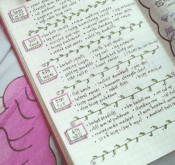
You might think that with all these complaints, I am not thankful or grateful for the treatments I have received, but it really is quite the opposite. These obstacles are just speed bumps. I gladly take these inconveniences over being sick or dying any day.

screen-shot-2017-01-30-at-10-36-05-pmSo at the end of January when gyms everywhere are beginning to empty in the annual, New Year’s resolution revolution (Why is it that we are compelled to make resolutions? Does anyone really keep them?) I will be grateful and know that I am good enough.


I am slowly learning not to beat myself up when I get tired, when I can’t do something I used to find easy, or when I’m gasping for air. I’m learning to accept my less lean self and love every inch of it, because it has been though the ringer and remains true. It’s a steep learning curve and there are always setbacks.  So the going is slow, but I will take this body for better or worse and learn to be kind to it.

AMscreen-shot-2017-01-30-at-10-05-27-pm

When life takes you down the rabbit hole…

I’d like to begin by saying WOW and Thank you! I never thought what I wrote would resonate with so many and I want to sincerely thank all of you for all the wonderful comments, encouragement, and for subscribing. I also thought I’d share the results of #BellLetsTalk Day with you.

screen-shot-2017-01-29-at-2-13-02-am

You can see here where the funds will be directed.

Besides from being truly humbled by your overwhelming response, it really made me pause and think. There are so many people out there that might be going through a tough or stressful time. I mean life can be really crazy, with or without cancer.

We spend so much of our time rushing around. From our jobs, or school, the grocery store, or carting our kids off here and there that life just becomes so overwhelming and maddening.

Rush…Rush…Rushscreen-shot-2017-01-29-at-5-43-57-am

I promised myself one thing after my first round with cancer, that I would never be complacent in my life again.

For a time, I was hyper aware of all the beauty life had to offer. I know this will sound silly, but it was small miracles like funny cloud patterns or the way my dog would snore, to the way the city was reflected in puddles. I noticed everything. After a while screen-shot-2017-01-29-at-5-47-34-amthough, life began infiltrating these moments and I found myself falling back into old habits. I found myself complaining about the weather (as Canadians will do), feeling my blood boil when I was stuck in traffic, the stars were dimmer, and then I stopped noticing.

I had fallen back into my former life cycle.

Wake up – shower – grab breakfast – grab purse – get in car- eat breakfast – get to work – get a coffee –start the day – work – grab purse – get back in car – drive back home – dinner – marking/planning – pack up for next day – bed. Wash – rinse – repeat.screen-shot-2017-01-29-at-5-52-03-am

Monotony took over and I began living life in autopilot, the thing I swore I wouldn’t do. Maybe before cancer, it was acceptable to just settle in, but not now. I had worked hard to have that life, get that job and build my career. Cancer changed everything. The goals I wanted before, even the ones I had worked so hard for changed, there was no room for being frazzled and stressed, living in a monotonous life.

So upon the recommendation of my psychologist I enrolled in a Mindfulness Based Stress Reduction (MBSR)* course. I was hesitant initially, because really who has time, but I did it. Now you may think MBSR is hokey and all kumbaya, but its one of the only meditation modalities being studied scientifically, and used in hospitals. It was hands down one of the best things I have ever done for myself and my mental health.

screen-shot-2017-01-29-at-5-57-05-amIt isn’t for the feint of heart, because of the time commitment (8 Weeks + home practice), but I swear it is worth it. Each week I would meet with a small group of stressed out over worked harried individuals and we would learn a specific practice or a few. Then we were tasked with homework. Typically it was an exercise in attention, some sort of meditation, and a very short “journal”. Initially it was a challenge fitting it in, but somehow if you are committed, you do find time.
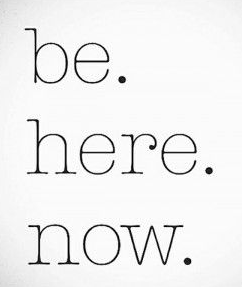
That was 5 years ago. I can tell you that the skills I learned in those 8-weeks saved me a few times. Like the day they told me my cancer had come back, and that there wasn’t much they could do (at that time). I had meditated while waiting for my oncologist, so I was calm and able to be rational and breathe. It allowed me to be clear headed and coherent enough to ask questions, something I likely wouldn’t have been able to do had I been extremely emotional.

As with anything, you need to practice or your skills get rusty. I have to admit that over the years, my practice hasn’t been what it used to be and once again life got in the way (dating, marriage, dogs, house, travel), so last year in September, I took the course again, this time a very willing participant. I will tell you, my mental health has been better since. I won’t lie, I don’t practice everyday (although I should), but I use it when I need it.screen-shot-2017-01-29-at-6-02-08-am

What I was thinking is, there are some online resources that are open-sources, so I thought that if anyone was willing, I would start with this post, and then the next 7 to “lead” a very rudimentary Mindfulness Group, by posting what each weeks lesson is, the practices and leave it up to you to try it out.

There is no right or wrong way, it is about learning to notice, becoming aware, and taking a moment to breathe. If you are game, Week 1 Resources will be posted below.

AM

*In 1979 Jon Kabat-Zinn founded MBSR at the Mindfulness Based Stress Reduction Clinic at the University of Massachusetts and nearly twenty years later the Center for Mindfulness in Medicine. Both these institutions supported the growth and implementation of MBSR into research and hospitals worldwide.


Mindfulness is the awareness that emerges through paying attention on purpose, in the present moment, and non-judgmentally, to things as they are.

– Williams, Teasdale, Segal, and Kabat-Zinn (2007)


Week 1 Mindfulness: Awareness & Automatic Pilot

  • When we are on Autopilot, we are more likely to become annoyed or have our “buttons pressed”.
  • Becoming more aware of our thoughts, feelings, and body sensations, we can choose not to go down “the rabbit hole” or mental ruts.
  • The aim of MBSR is to increase awareness so that we have more choices when we respond to situations, rather than react automatically.
  • To achieve this, we practice becoming more aware of where our attention is and deliberately changing the focus over and over.

Activity 1: Raisins

Take a raisin, or any small edible item. On a piece of paper, write down your immediate thoughts about that item. Next, use each sense to examine the item. Eyes, ears, fingers, mouth. Do each for a good minute. Now write down what you notice.

Meditation 1: Body Scan

Begin with a 45-minute body scan (see below). I suggest a quiet place where you can either sit or lay down. Its ok if you fall asleep. I did.

Home Work:

  • Do the body scan 6x for week one
  • Record what you notice each time you do the practice.
  • Choose one routine activity (washing your face, brushing your teeth, lacing your shoe, etc.) and make it deliberate, just like the raisin activity.
  • Eat one meal mindfully (i.e. Like the raisin activity)

Meditations:

www.guilford.com/MBCT_audio (Requires creating a user account)

https://health.ucsd.edu/specialties/mindfulness/programs/mbsr/

Suggestions/Tips:

  • Learning suggestions
  • Dress comfortably in loose-fitting clothing (sweats or yoga-type clothing work well).
  • Use a mat or pad that you can lie on the floor with.
  • If the temperature varies the room you are using you might want to dress in layers.
  • Choose a quiet spot or time when others will not be interrupting.
  • Download meditations to an iPod or other listening device for easy listening.
  • Good Luck


Cracks and Raw Edges (Revisited)

I read yesterday that Carrie Fisher was laid to rest and that her ashes had been contained in a Prozac urn. It both mad me sad (that we lost an icon, childhood hero, and mental illness advocate), but made me laugh at her ultimate nose thumbing. It is a true testament screen-shot-2017-01-07-at-3-56-37-pmto her wit and humour. Carrie’s Leia was the first princess I ever wanted to be. I mean why not? She was plucky, beautiful, spunky and carried a blaster, what little girl wouldn’t want to be her?! Sadly I was ill equipped and lacked the follicular capacity to create those famous cinnamon buns, Cinderella it was. All humour aside, her passing reminded me that all of us struggle, sometimes it is invisible and private and sometimes it is right there in your face. Regardless of which it is, we all have the capacity and grace to pull ourselves up and make a comeback.

I don’t only live with one invisible stigmatized disease (lung cancer), but two. I also live with depression and anxiety. You may think that it came about after being diagnosed with cancer, but my first diagnosis occurred in my mid-20s. Since then, a lot has happened and understandably, depression has played a fairly significant roll in my life post diagnosis. I screen-shot-2017-01-07-at-3-43-10-pmhad an inkling that it may come around again post Dx and tried to head it off at the pass, but your body and mind have a way of telling you it needs help.

In my 20’s depression was a sleeper. It snuck up on me and slowly took over my life over the course of a year. In my cancer years, even being fully aware that it could happen again, it hit me like a truck with anger and bitterness, two emotions I didn’t need in my life or recognize as depression. Rather than allowing my life to be dictated by these volatile emotions, I sought out help. Lots of it! I went to Young Adult support groups, saw a psychologist, was part of an online lung cancer group, and finally took medication. I needed it all, and it helped.

Two years ago I tried weaning off my meds, I wrote about and shared the experience with The Cancer Knowledge Network. The entire experience was both eye-opening and rather terrifying. I share it again here because I want people to know that there is no shame in having a mental illness, and there is no shame in asking for help when you need it. It is not a weakness but rather a great strength and sense of self-awareness.

I have cracks and they are starting to show. Actually I’m crumbling. I tried an experiment, it failed. Or maybe it was a raging success, because I’ve come to the grim realization that for the rest of my life I will depend on anti-depressants to regulate my mood. I suppose that you should be careful what you wish for, because you just might get it…

I wanted to see how I would fare weaning myself off of my meds just to see what it would be like to feel normal. Maybe I’d be happy and satisfied and in control of my emotions, because for 4 years I’ve felt numb. It felt like I wasn’t experiencing my life as fully as I should. I missed the raw edges because I wasn’t sure if what I was feeling was as intense as it should be. I was happy and sad but never really happy or really sad, which is why I suppose I began taking meds in the first place. The highs and lows were just so extreme that I was a walking minefield.

Afterwards though I was even keel, but dulled somehow, at least I felt like I was dulled. So I thought was could it hurt?

It’s been almost a month and I’m feeling. Feeling angry and bitter, sad and depressed. I actually hate myself right now. I don’t like wallowing in self-pity, but that’s exactly what I’ve been doing. I want to curl up into a ball and sleep. I want the world to go away and just leave me alone. I hate feeling this way! I hate that I can’t be happy for others without feeling sorry for myself. I hate thinking that my life has been a series of tragedies that I just happen to scrape through. I hate thinking that I should be happy because I’m alive. I hate not getting what I want, what I’ve worked hard for. I hate self-pity!

So on Monday I will fill my prescription again and hope that the edges will become dulled so I can be the person I was a month ago before this brainchild of mine, before I became myself. I will become comfortably numb like the song says and I will feel…less. I won’t hate myself so much, and I’ll go on. I just wish I didn’t need pills to keep me from being me, a me who apparently is bitter and angry even if I am grateful to be alive, because sometimes even that isn’t enough.

It is my hope that some one reading this will reach out if they are struggling, because sometimes it is just too much to hold, and you need someone to help you let go.

AM

Resources: screen-shot-2017-01-07-at-3-45-59-pm

CAMH

I Need to Talk to Someone

Mental Health Help Line

Mental Health Facilities