
I am long overdue for an update, but that will have to wait (just a little longer). I am posting today because I think this message needs to be heard. I tend to focus on my niche in lung cancer, but the truth is, its a big wide open field. For a very long time (think since the 80’s) the survival rate has remained pretty stagnant with few exceptions. So when one hears the word Mesothelioma, you can understand the fear it strikes on one’s heart. It was March 1998 when my family got the news my father was diagnosed with pleural mesothelioma and given months to live. To his credit, he survived 16 months. Since that time, and for a long time, treatments didn’t change and neither did the prognosis. Until now. 
On August 1st, it was Lung Cancer Awareness Day, I was supposed to post this then, but I held on to it deliberatly to make a point. Every day is Lung Cancer Awareness Day for me and my family, and for all those who have been touched by this terrible disease. So I post this today, because August 6th is Lung Cancer Awareness Day as is the 7th and 8th and so on.
The second reason I post this is because many people out there who have been diagnosed or have a family member who has been diagnosed may not realise that asbestos exposure at the work place is a work place hazard, and that often, there are class action  suits or government programs (although they don’t advertise!) to help support both the patients and their families. In Canada where I live, asbestos and its products are not
manufactured or in use, however, oftentimes exposure can come from old materials such as drywall, pipe fittings, or coatings. So if you are planning on a renovation, or work in construction, it is wise to be aware of potential exposure. Asbestos is stable until it is disturbed, so it is advised that you contact an inspector or a remidiation company prior to any demolition or work. I will post some links to information and contacts at the end of the post. Now that I have gotten that off my chest, I welcome you to read the following article: Mesothelioma doesn’t have to be a death sentance, by guest author Gregory A. Cade of the Environmental Litigation Group, P.C.
I have worked as an attorney who specializes in mesothelioma, asbestos and environmental law for over twenty years, and in this time my firm, Environmental Litigation Group, has helped more than two hundred thousand clients. I have spoken to many people and I have learned about their lives, experiences, fears, I became close to my clients and I have learned what most people think when they hear that they have mesothelioma.
First of all, it is important to define what mesothelioma actually is, as some readers might not have heard about it until now. Mesothelioma is a rare, very aggressive type of cancer that develops after asbestos fibers enter into a person’s body. This disease is extremely volatile, in the sense that it can metastasize extremely fast and it can take either a few months to a few decades for the cancer to develop, after being exposed to asbestos. There are 3 main organs where mesothelioma can develop: the lungs (pleural), the abdomen, liver, spleen and intestines (peritoneal) and the heart (pericardial). There are rare cases in which mesothelioma develops in other parts of the body, such as the testicles.
Throughout my career as an attorney, I have met many people diagnosed with pleural mesothelioma, the most common and aggressive form of this type of cancer. It is always heartbreaking to speak to them because you always feel and see the fear and hopelessness in their eyes. Many people would see a cancer diagnosis as equal to a death sentence. On top of that, because of its aggressiveness, since they are diagnosed mesothelioma, patients are usually expected to live between 6 and 18 months. This is why, most clients come broken and defeated, having already given up on the fight with the disease.
I believe that this is an incredibly wrong and dangerous mentality! To every person sick with this illness that comes through my door, I tell them to keep fighting, to never surrender. I personally know people who have lived over 10 years with mesothelioma. They do sports, go outside, eat at restaurants and they look great! Nobody would even think that they have cancer. As cliché as it may sound, I believe that cancer can be beaten and that nobody should ever give up hope.
In the last years, more and more treatments are becoming available to help cure cancer patients, or at least extend their lives. Chemotherapy and radiation therapy, although they yield results, are not the only options anymore. There are precise surgeries which remove damaged tissue, medical trials that can help people, there are blood transfusions to strengthen the immune system, there are pills which help fight the disease and keep it from spreading. All of these methods are worth trying as they can be the difference between life and death.
Of course, because mesothelioma, and cancer in general, are such aggressive diseases, patients adopt a fatalistic approach towards life. I want to urge people who may find themselves in this unfortunate situation to keep pushing forward! There are so many wonderful things to explore and if you are given a chance to do them, why not take it? Indeed, there are odds that the cancer will still progress, but even so, remain hopeful! Some clients who combined exercising with healthy eating and regular treatment have survived for more than 5 years, some even more that 10! They have watched their children grow, have remained with their loved ones, have explored the country and they have grown as a person. So I must emphasize once more, keep on fighting, hoping and taking care of yourself because cancer doesn’t have to be a death sentence.

Asbestos Information:
In Canada:
- https://www.canada.ca/en/health-canada/services/air-quality/indoor-air-contaminants/health-risks-asbestos.html
- https://www.ccohs.ca/oshanswers/chemicals/asbestos/home.html
- https://www.asbestos.com/mesothelioma/canada/
- https://cupe.ca/fact-sheet-asbestos
- http://cmfonline.org
- http://cansav.ca/compensation
- https://www.ncbi.nlm.nih.gov/pmc/articles/PMC2365488/
USA:
- https://www.epa.gov/asbestos
- https://www.cancer.gov/about-cancer/causes-prevention/risk/substances/asbestos/asbestos-fact-sheet
- https://www.cancer.org/cancer/cancer-causes/asbestos.html
- https://www.osha.gov/SLTC/asbestos/
- https://www.cancer.org/cancer/malignant-mesothelioma.html
- http://www.lung.org/lung-health-and-diseases/lung-disease-lookup/mesothelioma/
International:
- http://www.who.int/ipcs/assessment/public_health/asbestos/en/
- http://www.ohsrep.org.au/hazards/asbestos/asbestos-in-the-home/asbestos-useful-websites-and-documents
- https://www.aic.org.uk
- http://asbestosglobal.org
- https://www.mesotheliomagroup.com
Spanish
A very special thanks to Gregory A. Cade of the Environmental Litigation Group, P.C. 2160 Highland Avenue Birmingham, Alabama 35205 (760) 696-7959
Be well,
AM
 When I started this Blog, it was really intended to be an outlet to express my life and with it was like living with a terminal illness, lumps and all. It is still that, but it has turned into so much more. Little did I know that a year ago on
  This year has been hands down the hardest year for me mental health wise. I have felt things that don’t seem like me. I have always been cheerful and tenacious, but since changing cancer medications, I have felt anything but. I wish I could just switch meds, but they ARE the thing that keeps me NED and cancer free(ish), so I can’t just stop, or change, I have to deal.
 Swallow, down the meds go. The thoughts soon float away. I then found myself on occasions, especially when I was feeling particularly down or feeling sorry for myself questioning whether or not everyone would be better off without me? On very rare occasions I actually uttered these horrible thoughts, “I wish I were dead.” There it is. Dark. I am not my thoughts!
 frequent counseling visits to vastly diminish the dark. I still feel down, but now I try to remember that tomorrow is a fresh start, I allow myself to feel whatever it is I need to feel, and then try to move on. I never give it a postal code. I won’t live there. I have too much to live for. Too much work to do. I love life too much, and I certainly didn’t go through all this to just throw-in the towel or bury my head in the sand.
 You can help raise awareness and funds by simply sharing
 About a year ago, I wrote about
  we keeping score? If we are, then we shouldn’t, because life owes us nothing.
 It has been a little while since I have posted and much has happened since the last post. One of the most notable things is, I was selected and awarded the IASLC’s Patient Advocacy Travel Award. This award allows me to travel to Yokohama, Japan for their annual World Conference on Lung Cancer. JAPAN!!! I cannot tell you how excited I am. For one, I get to travel to a country that I have always wanted to visit. I get to soak up the latest information on lung cancer research and practice. I get to network with other patients, advocates and experts in the field of lung cancer research, and I get to go to Japan. Have I mentioned I’m going to Japan!?










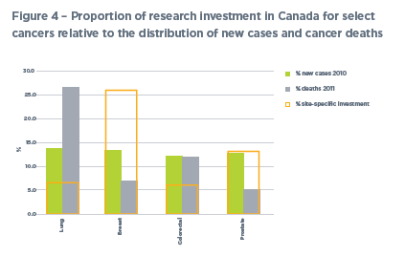
 done on metastatic patients, or patients who are outliers? I imagine they feel neglected too. In the U.S., part of this problem may have just been addressed with the signing of the 21st Centuries Cures Act. The rest of the world however may not have a course correction, so we need to be able to recognize that in order to have equality, we need to point out the inequities. Then instead of cutting the pie smaller, we need to bake a bigger pie. We need to break down barriers, and share information. More and more we see that the driving mutations in different disease groups are the same.


 It is impossible to describe the feeling when you meet someone else like you.Therefore unimaginable when you meet 60. All I can say is my heart was full and I am so privileged to be a part of such a wonderful event. This was Lung Cancer Canada’s first Hope Is Here Patient Summits, I know it won’t be the last. I thank everyone in the office and all the volunteers and sponsors for everything you did!

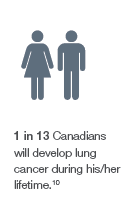 Every year 28,4001 Canadians and 221,2002 Americans are diagnosed with lung cancer. Of those diagnosed, 20,8003 in Canada and 157,4994 in the US will have their lives taken from this disease. The truth is that while many other cancers have improved 5-year survival rates, lung cancer still remains one of the lowest at about 17%5.
 If one has asked me what type of cancer I thought I may get in my lifetime, seven years ago before lung cancer happened to me, I would have thought it would be breast cancer. After all, I am a woman with breasts and like many, I didn’t think that because I was human and had lungs that I’d be at risk. The reality is, one of the fastest growing segments in lung cancer is the population of young, non/never smokers (17.9%)7. Add to that the population of people who had previously quit smoking (60%)8, and you begin to get a different picture of lung cancer.

 . I know differently now.
 These Are My Scars
You must be logged in to post a comment.